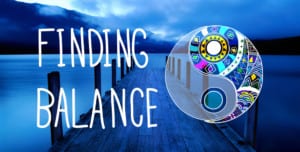
Finding Balance Through Detachment
Definitely, on retreat, we work with great diligence on the hindrances of attachment and desire, which are two terms translated from ancient wisdom traditions that often confuse modern Western students. Markedly, this article aims to briefly clarify these terms and then show how a more complete understanding will aid our spiritual journey and practice.
.
On Attachment
In Western psychology chiefly, attachment is understood as a positive quality. A child’s attachment to a caregiver particularly creates deep bonds and a sense of belonging to the human community. The child’s brain significantly depends on attachment. Babies and toddlers that receive less touch and have no deep attachment, consequently form smaller brains. To be attached in our culture means to care, love, and feel a part of something. Yet ancient wisdom traditions often point to the attachment as the source of nearly all suffering.
The Parable of the Two Arrows
The Buddha tells a wonderful story called The Parable of the Two Arrows (Sallatha Sutta). The first arrow we think of as life with its twists and turns, sickness and disappointments, and finally death. No matter how wholesome our thoughts and how careful our choices are, we will still be struck by the first arrow at various times in our life. That’s the nature of being human. Hence the human condition contains both joy and sorrow, gain and loss, birth and death. Let’s call this arrow “pain.”
The second arrow (and the third, fourth, fifth, etc.) is what happens after our interaction with the first arrow (with life and base reality). We wonder “why me?” We tighten, resist, blame, and become angry. As well, we brood over the same hurts for hours, days, weeks, and even years. These arrows represent the self-inflicted wounds of the suffering. They represent a kind of fantasy world, divorced from reality (even if there is truth in them), leading us to experience suffering in reaction to pain.
The Source of Suffering Gets Discovered in Retreat
So what does it mean that attachment is the root source of nearly all suffering? In this context, attachment refers less to love itself and more to grasping, clinging, and the ego’s need to control outcomes. Many people discover attachment most painfully in relationships. We may deeply love another person, yet still cling to expectations, outcomes, or fears that quietly create suffering. The tighter we attempt to control people, circumstances, or how life “should” unfold, the more disconnected from peace we become. Spiritual growth asks us to love fully while loosening the ego’s desperate need to grasp, possess, or control.

.
Feel it in your body. Attachment feels tight, small, contracted, freaked out, and controlling. It’s a clenched fist. Attachment-free love feels open, healing, and expansive. To be unattached, in this context, isn’t to be deadened or cold, distant or removed. It’s simply to have a preference. Then not cling to your preference or to how you think things should be. It’s the ability to accept base reality (aka reality without our added embellishment or denial) as it is. It’s the ability for the present moment to be enough for you, as is.
The Second Hindrance: Desire
Subsequently, in many ancient wisdom traditions, desire also gets a bad rap. However, this is a misunderstood concept. Desire is a natural part of being human. Furthermore, without desire, we wouldn’t find food to survive or procreate. Without desire, we may not have music, art, or technology. Desire, referred to in wisdom traditions, means compulsive desire. It truly means to be hooked. We can all understand the difference between someone that desires a glass of wine in the evening vs someone that must have a glass of wine to unwind and becomes irritable when denied.
Compulsive desire is a desire unconnected to joy. At most, it serves as a momentary amelioration from suffering. A desire that is addictive, even subtly, truly stands in the way of our happiness and ethical practice. To know if a desire is compulsive, simply deny yourself for one day. A healthy, unattached desire can bow to spirit, the big picture, and to our hearts. A compulsive desire drives the ego away from Spirit or our higher self. Read more how humility tames the ego.
The Value of Retreat
This world tends to use unhealthy desires as marketing. It is challenging to unplug from what we are attached to and move toward what is truly wholesome, fulfilling, and satisfying to all aspects of our being. We often need to retreat to a quiet space, in order to slow down enough to see what “hooks” us. The idea is to find your own true path. The path in life that can bring lasting meaning. Spiritual growth isn’t about attaining some esoteric state of zoned-out non-attachment, it’s about living every moment true to yourself, free of habit and compulsions. Learn more about our Spiritual Retreats in Sedona.
Visit our Google Profile
Are you ready to expand your spirituality for self-growth?
Call us today at 928-282-2509 or Contact Us for a free consultation!
Need Help Deciding Which Retreat is Right For You? Grab 15 min.
Listen to Our Podcast
Add SpiritQuest as a Preferred Source
Enjoyed this? Add SpiritQuest as a Preferred Source on Google so you see more of our mind, body, and spiritual healing articles in your searches.
Reach Out to Us
About the Author: Rayonna Lash
