

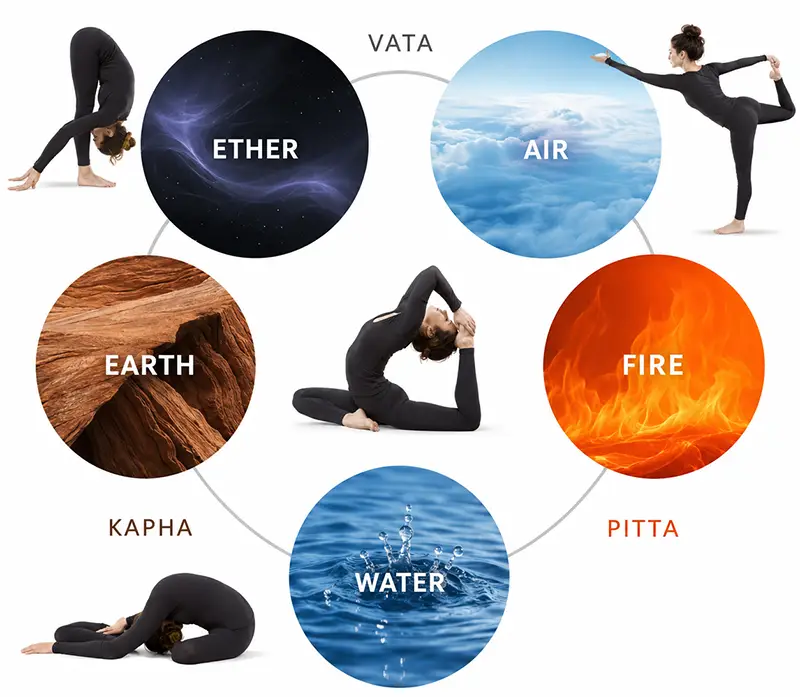
Yoga & Ayurveda to Balance Your Dosha
Find your flow, discover your roots, and enhance your overall wellness with the combined wisdom of Yoga and Ayurveda. These ancient traditions work in tandem to help you navigate life with more ease and clarity. At the heart of this journey is your Dosha, your unique energetic blueprint composed of fire (Pitta), earth (Kapha), and air (Vata).
High Pitta usually means you have an athletic body type and likely have a driven/ambitious personality. These are Type A personalities who are usually very successful in their work.
Balanced Pitta
-Eat a Pitta-balancing diet.
-Eat in a quiet tranquil environment.
-Avoid artificial stimulants.
-Engage in calming interests, such as time in nature.
-Meditate daily.
-Do yoga, tai chi, or walking.
Strong Kapha nature is commonly associated with a tendency to hold weight or retain water, maybe also a liking or inclination toward material possessions. Often Kapha types own nice things; homes, cars, etc. This is a stable, steady personality, but sometimes has difficulty with, or resistance to, change.
Balanced Kapha
-Eat a Kapha-balancing diet.
-Simplify your lifestyle.
-Focus on non-attachment in daily life.
-Do emotional housekeeping regularly.
-Routine for meditation and writing.
-Go to bed early and rise early.
Conversely, the Vata persons are lighter body type that tends to be thin and constantly changing. They may be unable to stay in any one place/job/relationship for much duration.
Balanced Vata
-Eat a Vata-balancing diet.
-Eat in a peaceful environment.
-Spend time in nature).
-Regular daily routine.
-Go to bed early.
-Meditate daily.
These are high-level generalizations of the doshas, and most persons are some combination of the three doshas. There are other aspects of each. A detailed ayurvedic analysis for yourself is most telling.
With an understanding of your dosha, you can apply ayurvedic and yogic practices to balance all three doshas within yourself.
Pitta persons will benefit much from cooling dietary habits and mellow yoga practices.
Kapha persons need to increase their Vata (air) so more active yoga such as Ashtanga or Vinyasa Flow is in order. As well, eating raw food like salads may be helpful.
Those with Vata predominance need to ground more. Eat root vegetables and take up Hatha Yoga practice and Nadi Shodhana wherein poses are held longer and the mind is cleared with breath.
Yoga and Ayurveda Are Deeply Intertwined
Yoga and Ayurveda are deeply intertwined sister sciences that originate from the same ancient Vedic tradition of India. While they have distinct focuses, they are designed to be practiced together as a comprehensive system for health, self-realization, and daily balance.
Here is how they relate to one another:
The Sister Sciences: Ayurveda is often called the “science of life” (focusing primarily on healing, diet, herbal medicine, and lifestyle), while Yoga is the “science of self-realization” (focusing on mental clarity, breath, meditation, and physical postures). They share the same philosophical foundation and view mind, body, and spirit as an inseparable whole.
Working in Tandem: Ayurveda provides the diagnostic framework, identifying your unique mind-body constitution or dosha (Vata, Pitta, or Kapha). At the same time, Yoga offers the practical tools to bring that constitution back into balance.
Personalized Practice: Because Ayurveda helps you understand your specific energetic blueprint, it dictates how you should practice yoga. For example, someone with a fiery, intense Pitta nature benefits from cooling, grounding, and mellow yoga practices, whereas someone with a heavy Kapha nature benefits from more active styles like Vinyasa flow to build energy and stimulate circulation.
Creating a Sustainable Daily Ritual
Building a wellness routine shouldn’t feel like another stressful item on your to-do list. The secret to lasting change is integration, not overhaul. Here is how you can weave stretching, yoga, and self-care into your day without feeling overwhelmed:
- Anchor Your Habits: Attach your new routine to an existing daily trigger. For instance, do your five-minute runner’s stretch and overhead reach right after brushing your teeth in the morning, or practice a grounding breathwork exercise while your morning tea or coffee brews.
- Start Small and Scale: You don’t need a full hour on the mat to reap the benefits. Commit to just five to ten minutes a day. A short, consistent daily practice is far more impactful than an occasional, exhausting 90-minute session.
- Listen to Your Dosha: Honor your body’s daily energy levels rather than forcing a rigid schedule. If you wake up feeling sluggish and heavy (Kapha), lean into an energizing flow; if you feel scattered and anxious (Vata), prioritize slow, grounded stretching and stillness.
- Designate a Sacred Corner: Set aside a small, uncluttered physical space in your home dedicated solely to your practice, even if it’s just enough room for a mat and a cushion. Having a visual cue waiting for you makes stepping into your routine effortless. True self-care is about tuning in, meeting yourself where you are, and honoring your mind-body connection every single day.
Deepen Your Practice at a Sedona Wellness Retreat
Understanding your dosha is a powerful first step, but experiencing these ancient practices in person, guided by someone who can read your specific energy and adjust in real time, is where lasting transformation often begins. A Wellness Retreat in Sedona combines personalized yoga, Ayurvedic principles, and the natural energy of the red rocks to help you build a practice that truly fits who you are.
